Redecorate Ltd apply limewash across residential, heritage and commercial interiors throughout the North West.
Limewash is used to create depth, texture and tonal movement across the surface.

Limewash changes with the surface, the colour and the light around it. The finish develops natural tonal variation and movement across the wall.
The result has depth and character, with the surface changing subtly as the light moves through the room.
Specialist decorating experience developed over more than 25 years, across projects in the UK and overseas.
The character of limewash changes with the room, the surface, the colour and the light around it. Our work includes residential and commercial interiors in the UK and overseas, with each finish adjusted to suit the space rather than repeated as a fixed effect.

Commercial offices · Limassol

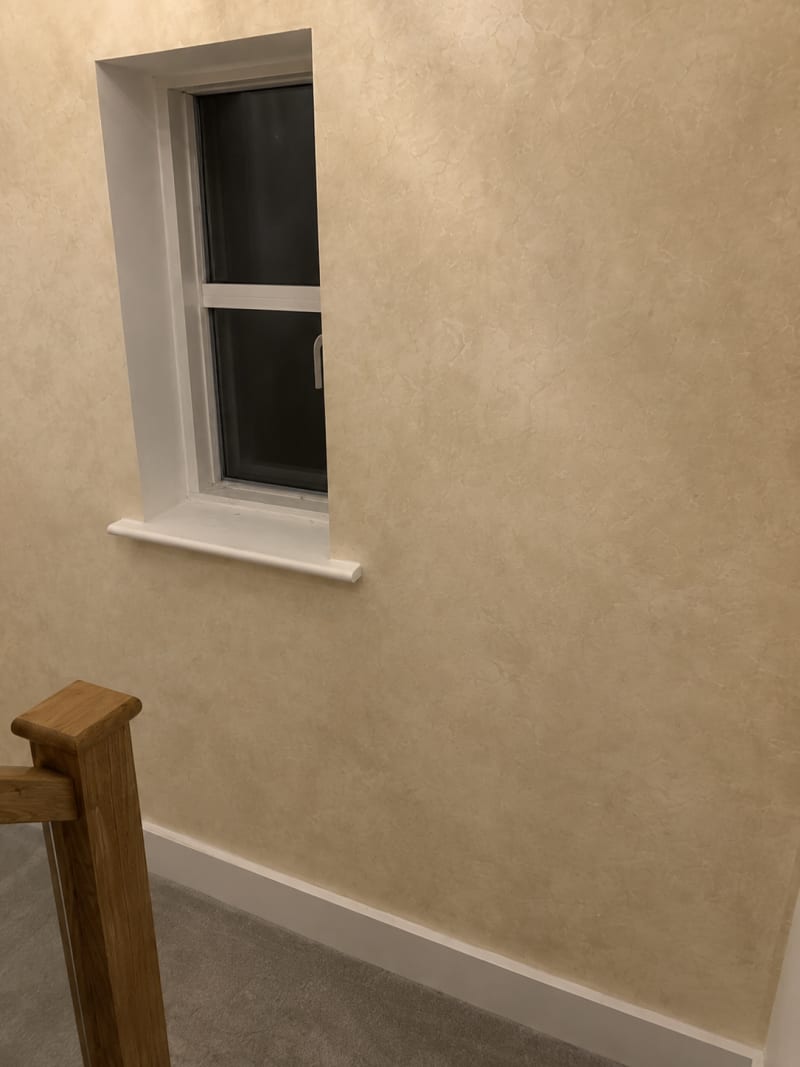
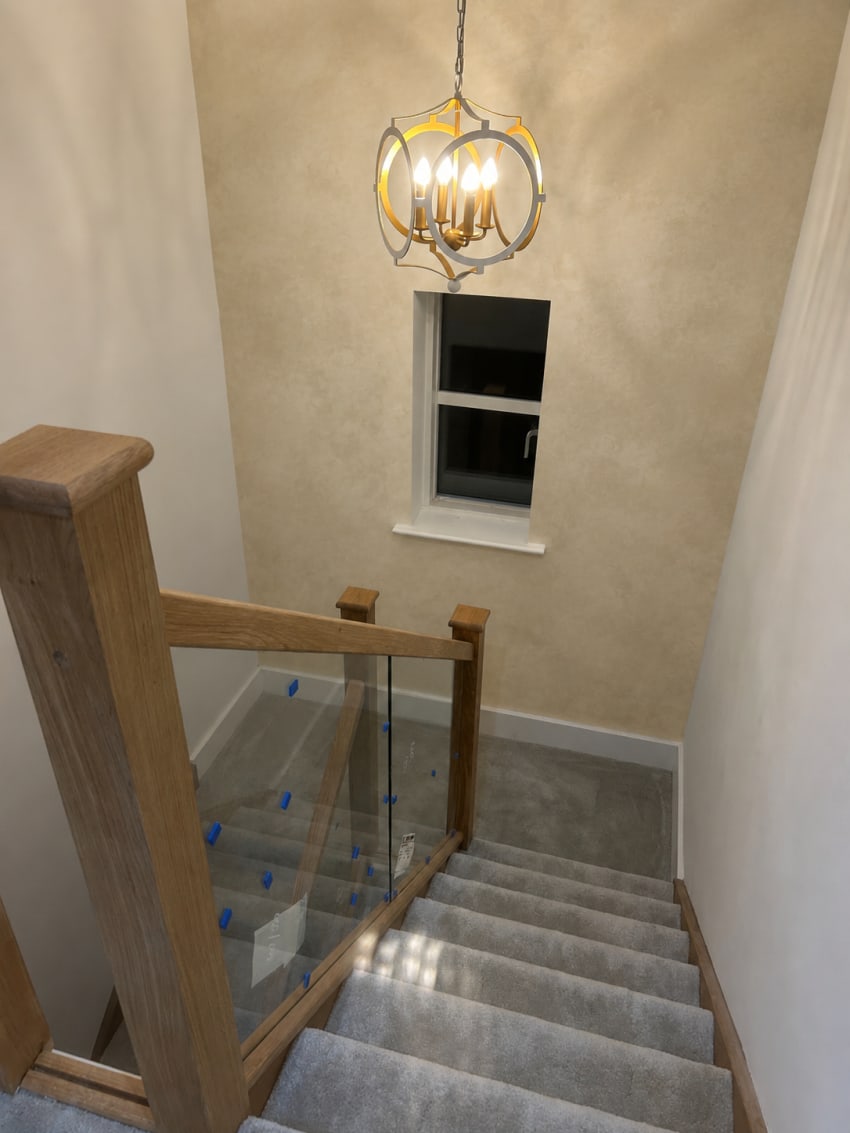
Stairwell · Wigan

Offices · Mansfield

Private residence
Limewash belongs naturally on porous surfaces such as lime plaster, brick, stone and suitable render.
It can also be used decoratively on some modern plaster, plasterboard and previously painted backgrounds where the chosen product system allows it and the surface is prepared and primed to that system.
We establish the substrate, the environment and the chosen coating system before specifying the finish.
Some clients want traditional limewash; others want the softness, movement and depth associated with it. The substrate, intended appearance and use of the room determine which mineral or decorative finishing system is appropriate. We explain the options before work begins.
Yes, when the chosen limewash system is suitable for a prepared and primed background. On the Mansfield office project, the plasterboard was taped and jointed, sanded, then given the compatible primer required by the system before the limewash was applied. On that build-up the limewash is being used as a decorative finish; the traditional vapour-permeable benefit applies to suitable mineral backgrounds rather than to the plasterboard system as a whole.
Traditional limewash is best suited to porous mineral backgrounds such as lime plaster, brick, stone and suitable mineral render. It can also be used decoratively on some modern plaster, plasterboard or previously painted surfaces when the selected product system allows it and the background is prepared and primed accordingly. We establish the substrate and the coating system before specifying the finish.
On suitable porous mineral backgrounds, limewash is highly vapour-permeable. That allows moisture vapour to pass through the coating, which is particularly relevant on lime-plastered and many older solid-wall buildings. Where limewash is applied over a primed or sealed modern background, the breathability of the wall is governed by the full build-up beneath it; the limewash finish does not make that wall system breathable on its own.
No. Suitable porous mineral backgrounds can often be limewashed directly once they are properly prepared, depending on the product being used. Modern gypsum plaster, plasterboard, previously painted surfaces and unevenly absorbent backgrounds normally need the preparation and primer specified by the chosen limewash system. We follow the coating manufacturer's requirements for the actual substrate.
Yes. Limewash can work well in commercial interiors where the substrate, durability requirements and maintenance expectations suit it. On our Mansfield office conversion, the plasterboard was taped and jointed, sanded, primed and then limewashed. The specification is based on the surface and intended use, as well as the appearance required.
Limewash is a mineral coating whose behaviour depends on the substrate and the product system. A limewash-effect or textured decorative paint is a different coating designed to create a related visual character on conventional painted backgrounds. We explain which system is being proposed and why rather than treating the two as interchangeable.
If you are considering limewash, tell us about the property, the area involved and the finish you have in mind. We can look at what you are trying to achieve, establish what the existing surface will accept and advise on the most appropriate options.